
Published on: December 31, 2025
In a Kolkata wedding, Bidai (also written Biday/Bidhay) is the most soul-stirring chapter—the moment when the bride says goodbye to her childhood home and steps into a new life. It’s not just a departure; it’s blessings, tears, smiles, and gentle silences happening together. For premium Bengali and luxury weddings in Kolkata, Bidai images must balance elegance with pure emotion—so the photographs feel honest today and priceless 20 years later.

Bidai is layered: quick hugs, rushing tears, rice petals, folded hands, a final look back. A strong Bidai photo sequence covers these micro-moments in 6–8 frames so the story flows naturally in the album.
1. Tight hug with Mother

2. Father’s hand over bride’s head (ashirwad)

3. Siblings holding dupatta/pallu

4. Rice/flower toss as farewell

5. Groom opening car door, gentle eye contact
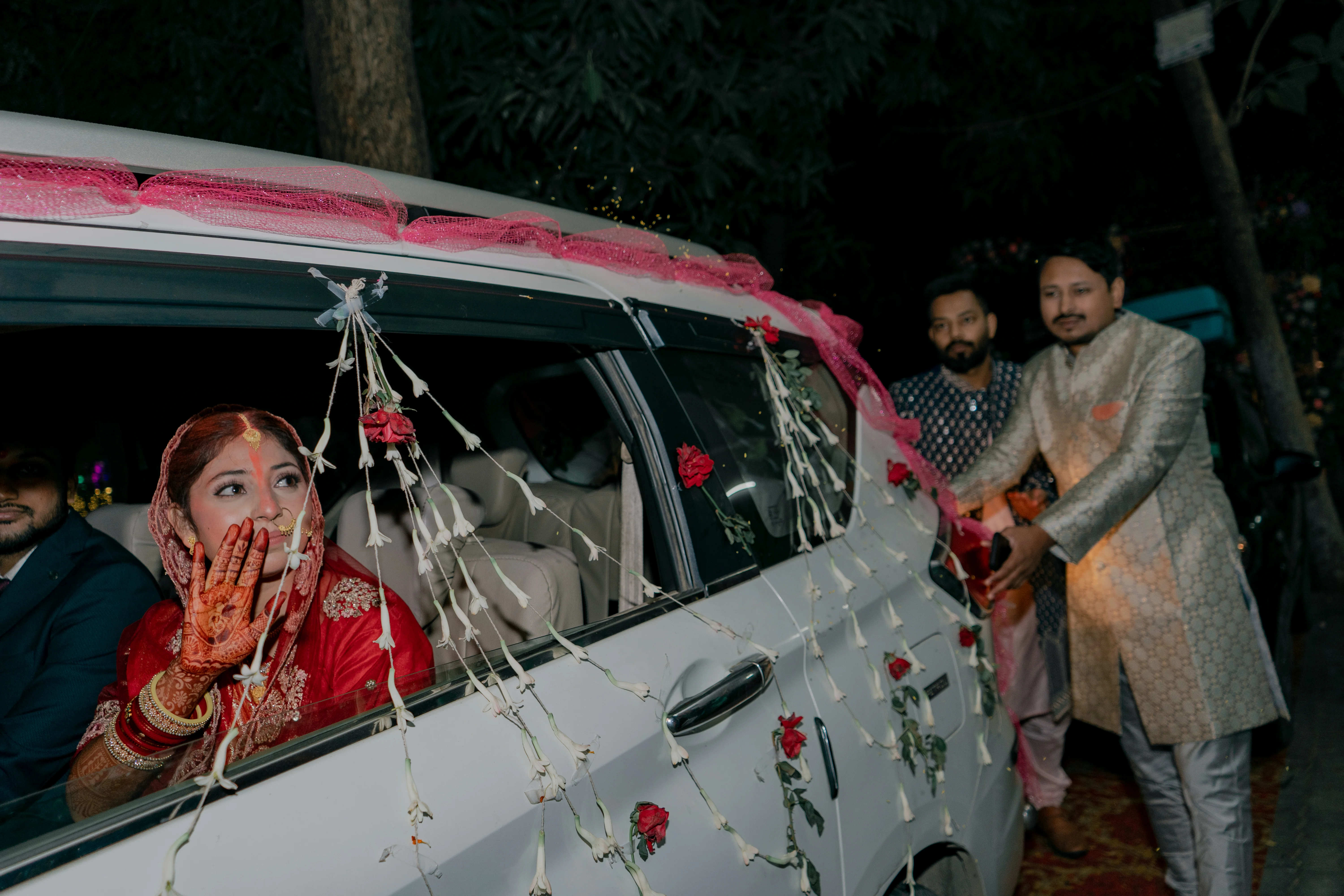
6. The last look back

In your premium Kolkata wedding album, place Bidai right after the couple portraits and key rituals. The transition from grandeur to intimate goodbye increases narrative impact. End the chapter with a black-to-color diptych: first the last glance (monochrome), then the car pulling away (color). It leaves a cinematic aftertaste.
In your premium Kolkata wedding album, place Bidai right after the couple portraits and key rituals. The transition from grandeur to intimate goodbye increases narrative impact. End the chapter with a black-to-color diptych: first the last glance (monochrome), then the car pulling away (color). It leaves a cinematic aftertaste.
When you hire a wedding photographer, you’re not just hiring for photos—you’re hiring for a vision to capture your wedding story.
Q. What is the best time to shoot Bidai?
A. Immediately after the final ritual. If it’s late evening, we bring soft lights to keep the ambience intact without harsh glare.
Q. What are must-have Bidai frames for a Kolkata album?
A. Mother’s hug, father’s blessing, siblings’ support, rice/flower toss, the last glance, and the handhold at the car door.
Q. Can Bidai be photographed discreetly without intrusion?
A. Yes. Our shooters work with telephoto primes and silent shutters so the family can stay in the moment.
Q. How do we avoid messy backgrounds in Bidai photos?
A. We pre-scout exits, clear visual clutter, and use shallow depth of field to keep focus on emotions.
Q.Can you deliver a high-resolution Indian wedding background from Bidai for prints?
A. Absolutely—ambient architectural frames (doorways, courtyards) are captured in high resolution for canvas prints and album spreads.
Call Muddyearth: +91-9875617352 Let’s plan your farewell story with sensitivity and style.


Looking for the best wedding photographers anywhere in India? Muddyearth specializes in premium wedding photography, candid wedding photography, cinematic wedding films, and destination weddings. Our experienced team captures every emotion, tradition, and celebration with timeless storytelling.
Contact us today for a customized wedding photography quote, pricing, and date availability.
Call us at +91-9875617352 or click the below Whatsapp button below to connect with our team instantly.
Planning your wedding? Receive a personalized quote based on your wedding events, location, and photography requirements. Check pricing, package options, and date availability directly on WhatsApp with a quick response from our team.


